The Bride! Turns Frankenstein’s Creation Into a Rebellion
The Bride! reimagines Frankenstein's companion as a woman seeking revenge, not love. A look at Maggie Gyllenhaal's role and the film's mixed reception.

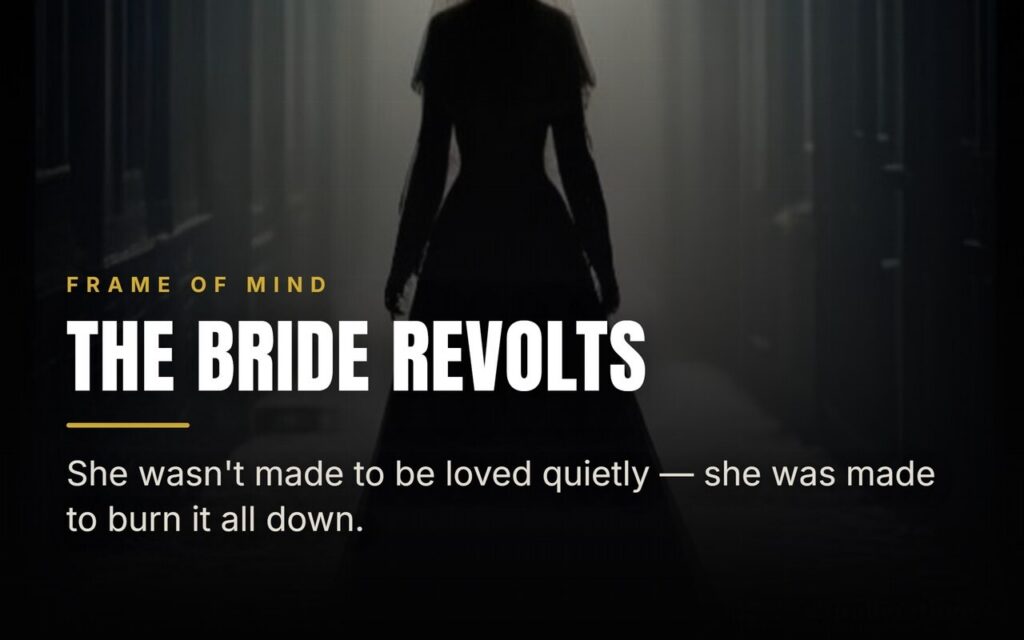
What if the Bride of Frankenstein wasn’t just a creature made to please a lonely monster, but the spark of an entire revolution?
The Bride! resets Mary Shelley’s story in 1930s Chicago, where an isolated Frankenstein’s monster asks a scientist bold enough to indulge him to build a companion. They settle on a murdered young woman, pulled back from death to keep him company — the same basic premise Universal’s 1935 original worked from, and the same premise that earlier film never fully let its Bride enjoy. Here, she refuses the role outright. Rather than settling into the part written for her, she turns the monster’s request into something closer to an uprising, dragging him with her on a violent flight across the country that plays less like a horror sequel and more like a gothic riff on the outlaw-couple picture — closer in spirit to Bonnie and Clyde than to anything haunted.
A Different Kind of Monster
The original had already planted the seed decades earlier: when James Whale’s Bride first laid eyes on the monster in 1935, her one reaction was a shattering scream of rejection — one of horror cinema’s earliest arguments that a created woman might refuse the role scripted for her, even before she had words to explain why. This new version doesn’t reinvent that instinct so much as give it an entire feature to run in, following the refusal past the scream and into open revolt. Maggie Gyllenhaal’s Bride is not built to be grateful. She comes back from the grave owing nothing to the men who assembled her, and the performance leans into that debt-free fury rather than softening it into romance. Where the 1935 film treated rejection as a single startling gesture and then ended there, this version stretches that refusal into an entire character: a woman who understands, immediately and completely, that being made by someone else’s hands doesn’t obligate her to want what those hands intended for her.
A Mixed but Telling Reception
Audiences and critics split on the result, and the split itself is revealing. The audience score on Rotten Tomatoes lands somewhere in the low-to-mid 70s, respectable, and noticeably warmer than where critics settled, closer to the high 50s. The average IMDb rating sits close to 6 out of 10 — the number a film gets when it has real defenders and real detractors rather than broad indifference — and the C+ CinemaScore from opening-weekend crowds suggests a good share of that first audience walked out less satisfied than they walked in. A split that wide usually means a film refused to sand its rougher edges down to please everyone in the room, for better and for worse.
That gap between a fonder public and a cooler critical reception tends to show up around films that reroute a familiar monster story into something angrier and less easily categorized — half creature-feature, half revenge picture, uninterested in choosing one register and staying there. The Bride! isn’t really asking whether its monster is sympathetic; it’s asking what happens when the thing built to be loved decides that isn’t the job it wants. Whatever else is uneven about the result, that question is the one worth sitting with after the credits, more than any tally of scores.
Mary Shelley’s original novel supplies the premise this film restores. In the book, it’s the creature himself who demands a companion, threatening to destroy everything Victor loves unless one is made for him, and Victor’s decision to tear apart the half-finished female creature before she ever wakes, out of sheer terror at what two of these beings together might choose to do, is one of the novel’s harshest and least discussed scenes. Every screen version since has had to decide what to do with a character Shelley herself was too frightened to let live.
That tonal instability is also the most common line of complaint against the new film. Viewers expecting a straight horror throwback have had the roughest time with something that keeps shifting registers, since a film trying to be a monster picture, a getaway thriller, and a reclamation story all at once risks satisfying none of those audiences completely. That’s a fair criticism on its own terms. It’s also, arguably, the same structural problem that made James Whale’s own 1935 sequel so unusual for its era, mixing genuine dread with black comedy well before that particular combination had a name or much of an audience ready for it.
Whatever else is uneven about the result, choosing revolt over romance for this specific character is the harder and more interesting swing, if only because ninety years of prior adaptations had already proven how easy the grateful version would have been to make instead.
The choice also fits a broader pattern in recent horror, where classic monsters keep getting handed back to whichever character the original story used and discarded, told this time from the discarded character’s own point of view rather than the point of view of whoever built or feared them. Universal’s own monster catalogue is arguably the deepest well available for that kind of reversal, since almost every original entry quietly assumed its creature had no interior life worth exploring.



