Eternal Sunshine and the Question of What Memory Is For
Eternal Sunshine of the Spotless Mind asks a harder question than whether love is worth the pain: can you erase memory without erasing part of yourself?

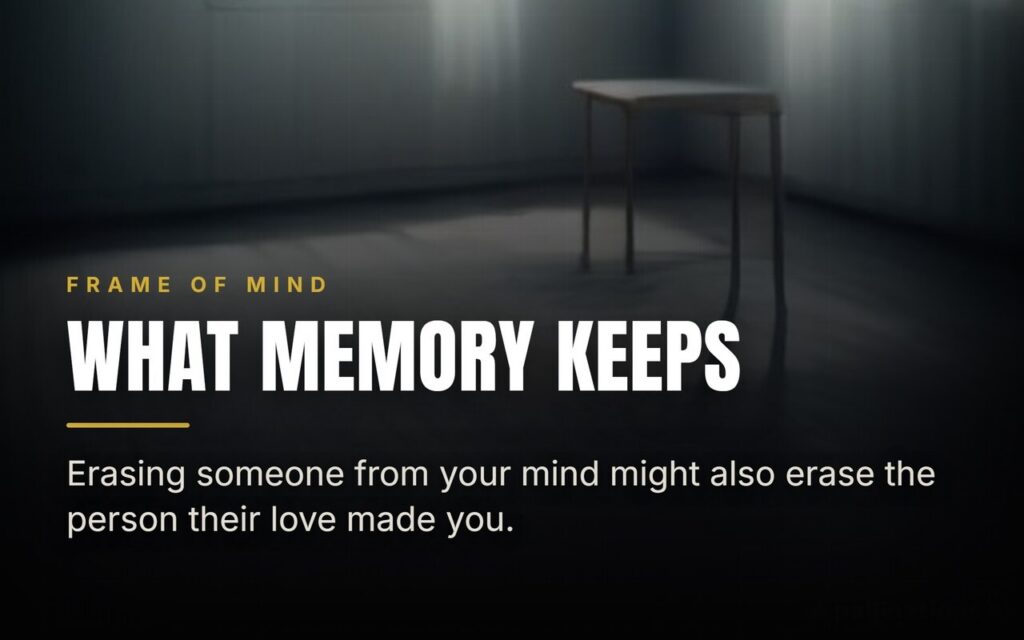
If you were offered a strange opportunity to wake up tomorrow and remember nothing about the person who broke your heart, would you accept?
No images of them in your head, no voice, no places that brought you together, none of those small details you thought you’d forgotten, which suddenly come back when you pass an old street or hear a song that once belonged to the two of you. Imagine being able to erase all the pain with a single press of a button. At first, in this film, the idea seems like a dream. What if a person had a way to escape the things that hurt them most? What if they could treat loss in the fastest way possible: erase the person instead of learning how to live after them?
Joel doesn’t decide to forget Clementine because he no longer loves her. He does it because he still loves her in a way that hurts him. And here the real story begins. Because the film doesn’t ask us whether love is worth the pain; it puts a crueler question in front of us: can you take the pain out of memory without taking part of yourself with it?
Memory Is Not Just an Archive
We tend to think of memory as an archive inside our head: saved pictures, voices, names, dates, as if a person could delete a painful page from their book and keep reading normally afterward. But our identity is more complicated than that. You don’t just remember what happened to you, you became the person those things made you. The love that let you down changed the way you love. The betrayal you went through changed your ability to trust. The loss you experienced made certain things more valuable in your eyes. Even the mistakes you wish you hadn’t made played a part in shaping the person you now see in the mirror. And this is where erasing memory becomes like erasing part of the story that made you.
Locke’s Old Question
This is an old question in philosophy. If a person loses their memory, do they remain the same person? John Locke believed memory is deeply tied to the continuity of personal identity. A person knows themselves through their ability to remember their actions and experiences as things that happened to them. Now imagine an entire part of your life disappearing. You no longer remember why you became afraid. You no longer know where some of your desires came from. You no longer remember why you changed. The same features might remain in the mirror, but the story that gave those features their particular meaning has vanished.
Watching the Erasure from the Inside
And here the film does something very clever. Instead of showing the erasure happening in front of us directly, it takes us inside the memory itself. As Clementine disappears from Joel’s mind, we begin to see the value of the things he wanted to get rid of.
The mechanics of the procedure make the point better than any argument could. As the erasure works backward through Joel’s memory, it moves from the recent, bitter fights toward the earliest, tenderest moments of the relationship, and Joel starts fighting the technicians from inside his own unconscious mind, hiding Clementine in memories that have nothing to do with her, trying to protect fragments the procedure was never supposed to preserve. He isn’t just watching the past disappear. He’s discovering, in real time and too late, which parts of it he actually wanted kept.
A fair objection to the film’s romanticism: erasure isn’t obviously worse than the alternative most people actually choose, which is carrying unprocessed pain forward without ever examining it at all. Plenty of people never get anything like Lacuna’s procedure and still manage to bury a memory just as thoroughly through simple avoidance, never revisiting the person or the place or the song, building a life-sized blind spot around a single relationship instead of erasing it cleanly. The film’s real target may not be memory erasure specifically but the more common, unglamorous habit of pretending something never happened rather than metabolizing it.
What makes the ending resist a tidy verdict is that Joel and Clementine choose each other again anyway, now armed with the tapes describing exactly why it went wrong the first time. The film refuses to say whether that’s hope or a diagnosis of how little any of us learn from being warned. Memory, it turns out, was never really the obstacle to happiness. What two people do with what they already know about each other was always the harder problem, with or without a machine involved.
Michel Gondry’s visual approach reinforces the same idea structurally: rooms collapse, faces blur, the beach house at Montauk dissolves plank by plank as the erasure works through it, so the audience experiences memory’s fragility the way Joel does, rather than simply being told about it.