The Lie We Tell Ourselves: Denial and the Illusion of ‘Once’
The most dangerous lie is the one you tell yourself. On denial, defense mechanisms, and the quiet illusion that real life will begin once things improve.

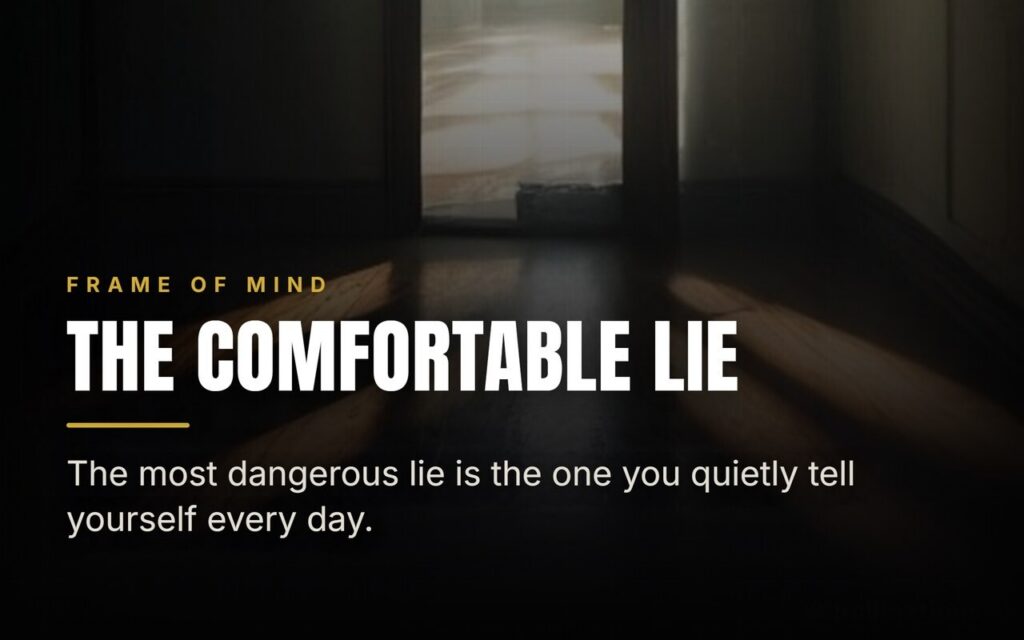
The most dangerous lie a person can believe is the one they invented themselves.
Because when you lie to someone else, you might at some point catch yourself deceiving them. But when your own mind builds you a comfortable story about your life, and repeats it to you every day, and brings you the evidence that proves it while ignoring everything that contradicts it, at that point the illusion is no longer a passing thought. It becomes an entire world you live inside. And the crueler irony is that you might actually know the truth somewhere very deep inside you. You know you wasted time. You know you’re on the wrong path. You know you’re putting off something important. You know the image you have of yourself is different from who you really are. And yet you keep clinging to the story that lets you get through your day. Why? Because the truth isn’t just information. Sometimes the truth demands change. And that’s where the story begins.
Denial
The human mind has a great capacity to protect a person from psychological pain. When something extremely harsh happens, or reality clashes with the image you hold of yourself, defense mechanisms can kick in. One of the most famous is denial, where a person refuses to acknowledge a painful truth, or downplays its importance, or reinterprets it in a way that softens its impact on them. Sometimes this happens without full awareness, the mind doesn’t sit you down and say “let’s deceive ourselves.” The process is more automatic. It’s trying to reduce the tension caused by something you’re not ready to face.
The Illusion of “Once”
Picture someone who spent ten years in a career because they were convinced it was their future. After all those years they discover they’re exhausted and don’t love their life. Now there are two truths in front of them. The first: they’ve been tired for years. The second: continuing might waste even more years. Admitting this is painful, because it means a huge part of their life needs re-examining. So the mind starts offering more comfortable solutions. “All jobs are exhausting.” “This is just a phase, it’ll pass.” “Once my salary goes up I’ll be happy.” “Once I finish my obligations I’ll start doing what I love.” Conditions really can improve. But sometimes that very sentence turns into a hiding place. Once the money increases. Once things get better. Once I have free time. Once I’m ready. Once people understand me. Once the new year starts. And suddenly you discover your entire life is built on a future that never arrives. This is one of the most widespread illusions: the illusion that real life will begin later. A person treats the present as a waiting room. They tolerate the job. Postpone learning. Postpone travel. Postpone writing. Postpone exercise. Postpone confrontation. Postpone decisions.
None of this is a new observation dressed up in new language. Sigmund Freud described denial as one of the mind’s basic defenses against unbearable reality, and his daughter Anna Freud later cataloged it alongside repression, projection, and rationalization in her work systematizing how the ego protects itself. What’s changed since then isn’t the mechanism, it’s the raw material it works on. A person a century ago denied grief, trauma, mortality. A person now can just as easily spend that same defensive energy denying a stalled career, a marriage running on inertia, or a decade quietly spent avoiding a decision that was always going to have to be made eventually.
It would be too tidy, though, to treat denial as pure malfunction. Clinicians who work with trauma and terminal illness have long observed that a period of denial right after devastating news can function like a pressure valve rather than a trap, giving someone a stretch of days or weeks to gather enough psychological footing to face what’s actually happening without being flattened by it all at once. The mind buying itself time isn’t inherently the enemy. The problem starts when the temporary shelter never gets vacated, when the story that was supposed to get you through one hard week quietly becomes the story you tell yourself for a decade, and the deadline for facing the truth keeps sliding because the whole system was built to keep sliding it.
The honest test isn’t whether you’re telling yourself a comforting story, since almost everyone does that sometimes and needs to. The test is whether the story is actively being spent down toward the truth or just being renewed on the same terms every time it comes due. Someone who says once things calm down I’ll deal with it, and then actually deals with it once things calm down, was using denial the way it’s supposed to work. Someone who says the same sentence every year, with the deadline pushed back every time it arrives, has stopped managing a hard truth and started building a permanent residence next to it.