The Blacklist’s Raymond Reddington and the Seduction of Evil
The Blacklist built its best question around Raymond Reddington: if a man takes down monsters worse than himself, does that make his evil more elegant?

Sometimes evil comes to save the world in its own way.
From the very first moment Raymond Reddington appears in The Blacklist, the viewer realizes he’s facing a complete idea walking on two legs. A man who turned himself in to the FBI of his own will, to propose a deal: I’ll expose to you the worst monsters in this world, on condition that I choose the method, the timing, and the collateral casualty if needed. From here the series begins its grand game — testing the limits of morality, the meaning of truth, and the price of power.
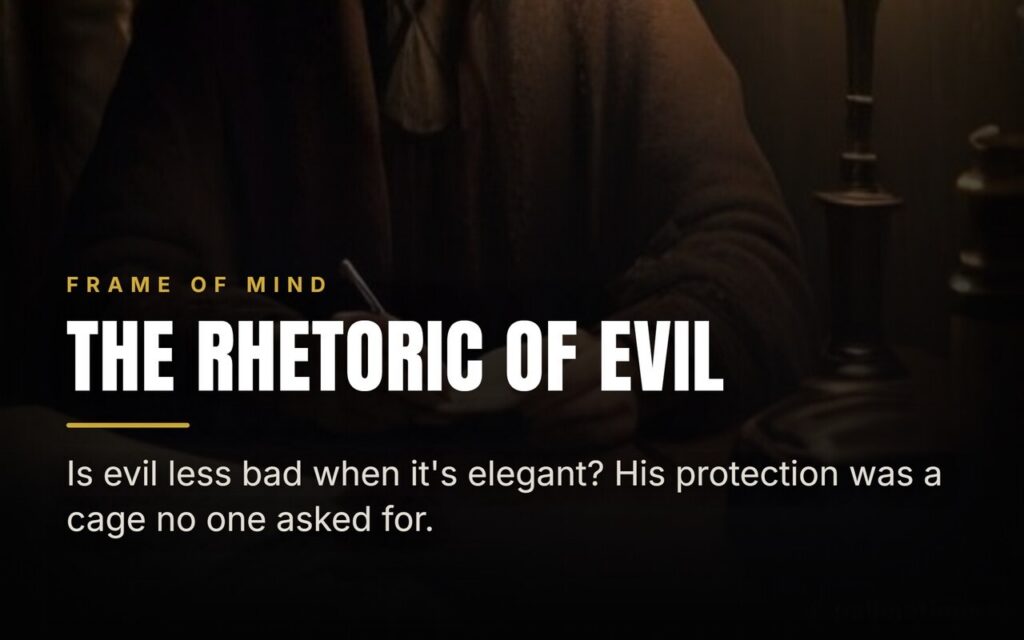
The rhetoric of evil
Reddington is an embodiment of what could be called the rhetoric of evil. He asserts himself through words, through a side story, through a calm smile in the middle of a major crime, and through an evident love of art, food, and music. This contradiction is a tool of control. When Red sits down to tell a story about a rare wine or a painting, he’s actually reshaping the balance of power in the room. He makes those around him less tense, less defensive, more willing to accept his deals. He persuades. He doesn’t threaten — he seduces. If this man is taking down “villains worse than himself,” does that make his evil less bad? Or just more elegant?
The clearest test of that rhetoric comes through Red’s decades-long relationship with Kate Kaplan, the fixer who has cleaned up his messes since Liz was a child. When Kaplan finally turns on him late in the series, it isn’t because she’s stopped believing he’s dangerous — she always knew that. It’s because she decides his idea of protecting Liz has curdled into something closer to possession, and she’s willing to burn down everything they built together to say so. Red loses the one person who understood him completely, not a stranger who misjudged him, which says more about the cost of his methods than any FBI agent’s suspicion ever could.
There’s a harder question underneath the show’s romance with Red that it never quite forces itself to answer: whether taking down worse criminals through blackmail, bribery, and the occasional killing is actually more moral, or just better dressed. Immanuel Kant’s categorical imperative offers a blunt answer here — using a person as a means to an end is wrong regardless of the end, which would make Red’s whole operation indefensible no matter how many trafficking rings or arms dealers he exposes along the way. The show doesn’t argue with that position so much as it keeps finding reasons to look away from it, letting Red’s charm do the work that a real ethical defense never quite manages.
A protection Liz never asked for
This same rhetoric is what led to the series’ most painful thread: the toxic guardianship Reddington practiced over Elizabeth Keen. Liz starts out as an ideal FBI agent, believing in the law, in truth, in clear lines between right and wrong. Red’s entry into her life was like a silent earthquake. On the surface, he’s her protector — saving her from death again and again, eliminating her enemies before she even knows they exist, and justifying every intervention with one sentence: “I’m doing this for you.” But protection the victim never asked for, and doesn’t understand the terms of, turns over time into a cage. Red wasn’t so much protecting Liz as reshaping her — pulling her step by step toward his world: a world of suspicion, preventive lies, and “necessary” crimes.
Knowledge or safety?
The question is never asked out loud in the series, but it creeps in between episodes… Did he want to save her? Or was he making a smaller version of himself… less experienced, and more fragile? Out of this relationship is born the series’ central conflict: knowledge or safety? Elizabeth Keen was always at a crossroads — should she know the whole truth, however devastating, or live inside the false safety Reddington provides? The series treats knowledge as a heavy burden. Every step Liz takes closer to the truth of Red’s identity, she loses someone she loves. Her husband Tom, who turns out to be living an elaborate lie. Her mother, surrounded by secrets and deception.
By the time the show finally starts answering who Raymond Reddington actually is — a storyline built around whether he’s an impostor wearing a dead man’s identity — the answer lands less like a revelation than one more act of control. Even the truth about himself, when Red finally allows it to surface, arrives on his own timetable, filtered through his judgment of what Liz can handle. He built his entire relationship with her on deciding what she gets to know and when. The final mystery just confirms he never stopped, and it leaves the show’s central seduction intact right up to the last frame: Red gets to be the one who finally tells the truth, which means he still gets to decide what telling the truth is worth.