The Best Offer: When a Forgery Expert Falls for a Fake
Virgil can spot a fake painting in a glance but never sees the fabricated love closing in on him — The Best Offer as a study in avoidant attachment and con.

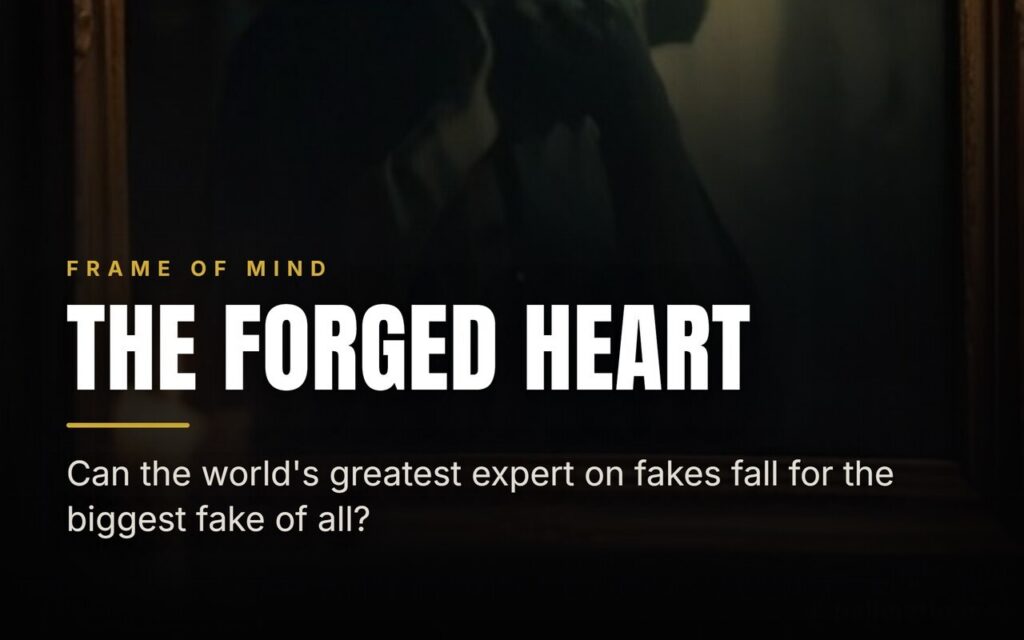
Can the world’s greatest forgery expert fall victim to the biggest lie of his life? Picture a man who’s spent his whole life handling paintings, smelling the scent of old pigment, able to tell you at a single glance: “this painting is genuine, and that one is a brilliant fake”… yet he was completely unable to discover that the “love” he lived through was nothing but a cheap copy.
A Wall Built Out of Gloves
Our hero, Virgil (the brilliant Geoffrey Rush), is a wealthy, elegant auctioneer, but he suffers from a strange phobia. He wears gloves all the time, hates touching things, and hates touching people. In psychology, this reflects an avoidant attachment disorder. He’s built a wall between himself and the world. But he owns a secret room full of hundreds of paintings of beautiful women. He’s content just to look at them, because they don’t talk, don’t betray, don’t ask for anything. He wants “beauty” without “the chaos of emotion.” He possesses art, but he doesn’t possess life.
The story begins with a call from a mysterious girl named Claire, asking him to appraise her parents’ inheritance in an old mansion, but she never appears. She suffers from agoraphobia (fear of open spaces) and lives behind a wall. Here the film plays a very clever psychological note: we adore what we cannot see. Virgil, who’s used to seeing everything clearly, is provoked by the mystery. Curiosity is the crack the con artists slip through. He sees in her a mirror of himself: both afraid of the world, both prisoners (he’s a prisoner of his gloves, she’s a prisoner of her room).
The Forger’s Theory Applied to Love
This is the pivotal line in the film, and the deeper idea behind it: Virgil always used to say that a forger, the artist who copies paintings, can’t resist putting a bit of his own soul into the fake painting — a certain brushstroke, a small detail. The great trick in the film wasn’t just stealing paintings, it was applying this very theory to “love.” The gang built him a complete play. The girl, the engineer friend, the dramatic stories.. it was all a “forgery.” But the question the film raises is: were Claire’s feelings entirely fake? Or did she, like the forger, slip something real of her own feelings into the lie?
Gradually, we watch Virgil take off his gloves. He touches dust, touches the girl’s hand, eats with his bare hands. You might think this is “healing,” but in truth it was “exposure.” The con artists made him feel safe, made him think he was the hero rescuing the princess from the tower, while they were pulling apart the “robot” (the mechanical parts he’d been collecting) and pulling his mind apart piece by piece.
The final piece of the con lands through the very object hiding in plain sight throughout the film: the disassembled automaton parts Virgil has been quietly collecting for years, believing them to be genuine antique mechanisms sold to him one at a time by his engineer friend Robert. Once assembled, the automaton turns out to be a working, speaking machine, built specifically to feed Virgil the voice he thought belonged to Claire during their earliest phone calls, long before he ever saw her supposed face. The reveal recasts nearly everything that came before it. The mystery he found so irresistible wasn’t a woman hiding behind a wall. It was a machine designed by people who understood exactly which kind of loneliness he was carrying.
Its final image is the cruelest thing in the film: Virgil, ruined and alone, sits at the small café table in Prague where he once arranged to meet Claire, waiting for her, or for the idea of her, against everything he now knows to be true. It plays less like delusion than like a final, deliberate choice — the forger’s own logic turned back on himself, choosing to believe in the fake because the fake, for one stretch of his life, felt more honest than anything real had ever managed to.
Whether any of it was real is the question the film refuses to answer cleanly, and that refusal is the point rather than a loose end. A con only works because it borrows the shape of something true; Claire’s fear, even her tenderness toward Virgil, may have started as a role and become something else along the way, the same way Virgil’s forgers can’t help leaving a trace of themselves inside every fake. Giuseppe Tornatore, who wrote and directed the film, spends the whole second half quietly asking whether a life devoted entirely to authentication was ever going to leave its owner able to recognize real feeling when it finally showed up in front of him. The Best Offer isn’t really asking whether Virgil was conned. It’s asking whether love, real or staged, was ever going to look any different to a man who’d spent his whole life refusing to risk finding out.