How Modern Hollywood Rewrote the Male Hero
A look at how DEI-era Hollywood reshaped its heroes — sidelining men like Indiana Jones into sidekicks and recasting old franchises around new heroines.

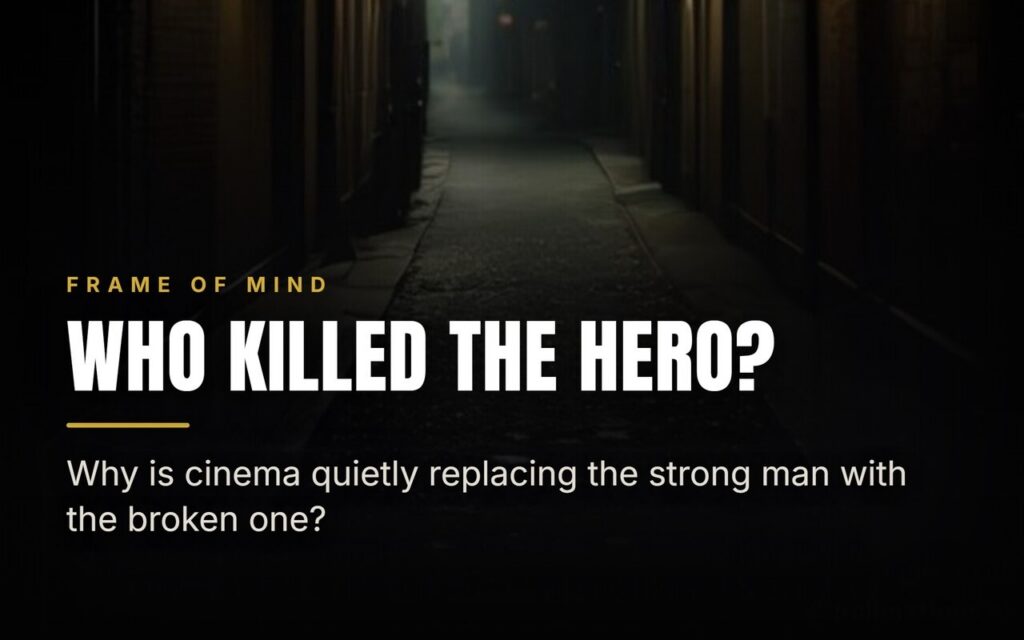
Did the “hero” die, or was he deliberately killed off?.. Why has cinema shifted from being an “entertainment industry” into “disciplining men”? Have you recently felt a lump in your throat while watching a film starring your favorite hero from the good old days (like Indiana Jones or Luke Skywalker)? Have you noticed that men in modern ads and shows are usually shown as “the helpless dad” or “the less-clever partner” who always needs someone to correct his course? You’re not imagining it, and you’re not “an enemy of women.” What you’re seeing is the product of huge intellectual, economic, and political shifts reshaping global consciousness, and at times deliberately “engineering society” through the screen.
Jump to section
How the Funding Changed the Story
In the last decade, specifically after movements like #MeToo and the rise of trends like political correctness and woke culture, the funding standards in Hollywood and on global platforms (like Netflix and Disney) changed. Evaluation no longer depends solely on “story quality,” but on diversity and inclusion (DEI) standards. For a studio to get funding or be considered for awards, it has to meet a certain “quota.” The result: instead of writing strong, original female stories (like Sarah Connor in Terminator or Ripley in Alien), studios reached for the easier solution — take a successful male-driven franchise and replace the hero with a woman, while making sure to portray the old hero as a failed, defeated old man to polish the new heroine.
The systematic dismantling of the “protector man” symbol: in psychology and mythological analysis, the man traditionally represents the role of “protector” and “provider.” Modern drama cleverly works to demolish this mental image through two tactics.
Two Tactics: The Sidekick and the “Toxic” Man
The first tactic: “the sidekick man” — in many modern productions, the man is no longer the one driving events; he’s just a “sidekick” to the heroine who knows everything from the very first moment. Example: Indiana Jones and the Dial of Destiny. Instead of honoring Indiana Jones in his final film, he appears as a broken old man living alone, while his friend’s daughter (Helena) is the smart, strong one who drives events and lectures him morally.
The second tactic: “the demonization of masculinity,” where traditional masculine traits (toughness, silence, leadership) are portrayed as “toxic masculinity.”
Star Wars gives the clearest test case. In The Last Jedi (2017), Luke Skywalker isn’t just older and wearier when Rey finds him — he’s a self-exiled hermit who, in a flashback, admits to igniting his lightsaber over his sleeping nephew Ben Solo in a moment of fear, the very failure that pushed Ben toward Snoke and the dark side in the first place. That’s a legitimately bold, dark choice for a legacy character, and it split the fandom right down the middle: some read it as a serious meditation on how myths curdle when the mythic figure turns out to be human and afraid, others read it as character assassination of a hero three generations had grown up idolizing. Both reactions can be true at once, and the disagreement itself says something — this wasn’t a quiet, uncontested creative decision nobody noticed.
The Myth of the “Mary Sue”
The myth of the “Mary Sue” and the disappearance of the hero’s journey in storytelling: the hero, male or female, is supposed to suffer, fail, train, then triumph — that’s what makes us love them.
Passing a franchise from an aging hero to a new lead is also a much older sequel mechanic than the DEI-era funding standards this essay blames. Rocky handed the story to Adonis Creed, Apollo Creed’s son, in Creed (2015), fighting one more bout as a trainer rather than a contender. Logan (2017) kills off Wolverine entirely so that Laura, a young mutant girl, can carry what’s left of the story forward. Both are legacy handoffs, both sideline or kill the original male hero, and neither was built around a female-replaces-male framework — they’re just how long-running franchises have always tried to survive past their original star’s shelf life. That doesn’t mean every instance of an older hero being diminished is free of the pressures this essay describes. But it does mean the mechanic itself predates the political explanation being offered for it, and a diminished legacy hero isn’t automatic proof of an ideological program rather than an ordinary, decades-old storytelling habit.
What’s harder to dispute is the commercial record, and it cuts in more than one direction. Some of these legacy-female reboots did solid business and others underperformed badly enough to get shelved or quietly written off, which undercuts the idea that there’s one unified, guaranteed-success formula being applied from the top down. A funding standard can shape what gets greenlit without guaranteeing what audiences actually respond to, and the box office has punished plenty of these films right alongside rewarding others. The more interesting failure, when it happens, usually isn’t that the new hero is a woman. It’s that the hero’s journey the essay rightly points to — earned struggle, real failure, a triumph that costs something — got skipped in favor of a character who arrives already finished, which would be just as hollow with a man in the role.