Hannibal and the Curse of Will Graham’s Empathy
On Bryan Fuller's Hannibal, Will Graham's dangerous gift for empathy, and how Carl Jung's idea of the Shadow explains why the show is really his story.

Some people watch the series Hannibal and think it’s just a crime show and nothing more, a clever killer chased by the FBI, each episode with a crime stranger than the last. But the truth is that writer Bryan Fuller did something completely different. The man took characters written by author Thomas Harris and turned them into one of the strangest works ever made for television — a show that makes you forget you’re watching an investigation, and feel instead like you’ve walked into an art museum, then a psychiatric institute, then a philosophy lecture, all within the same scene.
Jump to section
Maybe that’s why so many people came away from the show unable to decide whether they hate Hannibal or are fascinated by him — because from the very first minute, the show tries to break down the wall inside us between the idea of good and evil, making you ask yourself: is a person truly fixed and unchanging, or can circumstances completely reshape him?
Will Graham’s Curse
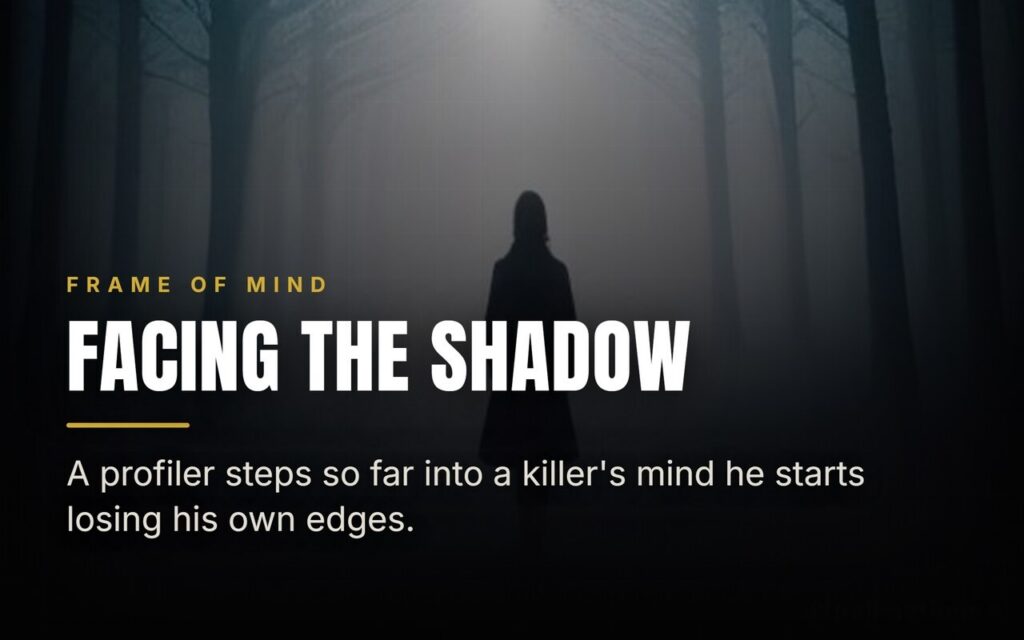
The first character you’ll discover isn’t as stable as you think is Will Graham. On the surface, he’s a brilliant criminal profiler helping the FBI, but the truth is he carries a burden almost no one can bear. Will has a rare ability for empathy — not empathy in the sense of feeling sad for people, no — he steps inside the killer’s mind, stands in his place, sees through his eyes, feels his emotions, reconstructs the crime as if he’d committed it himself. And when he says the famous line, “This is my design,” he has, in fact, lived every moment of the crime.
The clearest illustration of what this costs him arrives early, with Garret Jacob Hobbs, the Minnesota Shrike. Will shoots Hobbs to save his daughter Abigail, and instead of relief, he’s left replaying the kill from inside Hobbs’s own head, murmuring the man’s private justification for murdering his daughters as though it were his own thought. That’s the mechanism the show keeps returning to: Will doesn’t solve the case and walk away clean, he absorbs it, and the absorbed material doesn’t leave. By the time his hallucinations settle into the image of an antlered stag, stitched together from the different killers he’s inhabited, the show has stopped being subtle about what’s happening to him. He isn’t studying monsters anymore. He’s accumulating them.
Carl Jung’s Shadow
This idea has roots in psychology. The Swiss psychologist Carl Jung spoke of something he called “the Shadow” — simply the part of ourselves each of us hides from ourselves — anger, aggression, the desires society taught us to fear. Jung believed ignoring the Shadow doesn’t make it disappear — on the contrary, it grows in the dark. And Will is constantly forced to go down and face that Shadow. Every new case pulls him closer to the side of himself he never wanted to admit exists. And this is where Hannibal comes in — because he’s the first one who sees that the problem isn’t Will’s ability, the problem is that Will is still resisting it.
What Neuroscience Adds
Neuroscience also offers a fascinating explanation — there are cells in the brain called mirror neurons, whose job is to help us understand the feelings of people in front of us, which is why seeing someone in pain can make you wince yourself.
It’s worth separating the show’s poetry from the FBI’s actual practice here. Real criminal profiling, developed largely by agents like John Douglas and Robert Ressler out of the Bureau’s Behavioral Science Unit in the 1970s and 80s, works by cross-referencing crime-scene evidence against a catalog of known offender patterns — organized versus disorganized crime scenes, victim selection, staging — not by an investigator emotionally becoming the killer. Will’s gift is that method turned into metaphor and pushed to a supernatural extreme, which is exactly why it works as psychological drama rather than procedural accuracy. Fuller isn’t claiming this is how the FBI operates. He’s using a dramatized version of profiling to ask a much older question about what it costs to understand cruelty well enough to predict it.
That’s also where the Jungian reading gets darker than it first looks. Jung’s own prescription for the Shadow was integration — folding the disowned parts of the self into a more complete, balanced whole, not surrendering to them. Hannibal, acting as Will’s psychiatrist, gives the language of integration while actually pushing for something closer to takeover, encouraging Will to stop resisting the Shadow rather than incorporate it. Bedelia, watching from the outside, sees this clearly and tries to warn Will away from it. What makes the show’s tragedy real, rather than just stylish, is that the process Hannibal calls friendship is closer to what Jung would have called psychosis: not a self made whole, but a self replaced.